UX/UI
Sescoop: Events — UX/UI
Sescoop
Context
The Sescoop Events module organizes events with a focus on travel and lodging. Before it, the process was scattered across official letters, emails and forms, and expense reporting was the biggest problem: a participant who hasn’t reported the previous trip can’t travel again. The system connects four levels (National Unit, State Unit, Cooperative and Traveler), with a travel agency supporting ticket purchase.
My role
I supported the research and the design thinking sessions. I designed the journeys, assets and screens, prototyped the navigation experience and followed the usability tests.
Research: CSD matrix (August 2022)
The CSD matrix sorts what the team knew, what it assumed and what was still in doubt. Below is a selection of the notes, close to the original wording.
Certainties
- Biggest problem: expense reporting.
- A participant can’t travel again without reporting the previous trip.
- Travelers use the system, but chasing expense reports is the State Unit’s responsibility.
- Steps are validated by the State Unit.
- Too many forms.
- People’s biggest difficulty: access.
- Focus of this stage: tickets and lodging.
- Responsive on mobile.
Assumptions
- We can have a single process.
- Login with a code sent by email.
- Regional differences will affect the process.
- A collaborative platform, which speeds up communication.
- Web.
Doubts
- Does the cooperative have access to the process?
- Official letter or email?
- Do we still need to require flight check-in submission?
- Can it be integrated with other systems?
- Are the National and State Units digital?
A 13-step journey
From creating the event to checking the expense report, the process runs through 13 steps:
- Create event
- Promote
- Receive
- Prepare invite
- Send invite
- Confirm
- Send registrations
- Buy tickets and lodging
- Check ticket issuance
- Send to traveler
- Travel
- Return
- Check expense report
Expense reporting comes last, after a long chain of handoffs.
Four levels, one flow
The notes describe a validation chain across four levels, with the State Unit validating the steps.
- National Unit: creates the event, generates the sign-up link, confirms registrations and forwards them to the agency, receives the quotes and confirms the purchase. It reaches participants directly.
- State Unit: reviews registrations (forward, return or cancel), validates the quotes with the traveler, sends the travel itinerary and approves or returns the expense report.
- Cooperative: registers in the system. In the CSD matrix, the cooperative’s access to the process was still an open doubt.
- Traveler: enters their details at registration, uses the system under the State Unit’s supervision; the original receipt file is the traveler’s responsibility.
The travel agency supports ticket purchase.
Screens
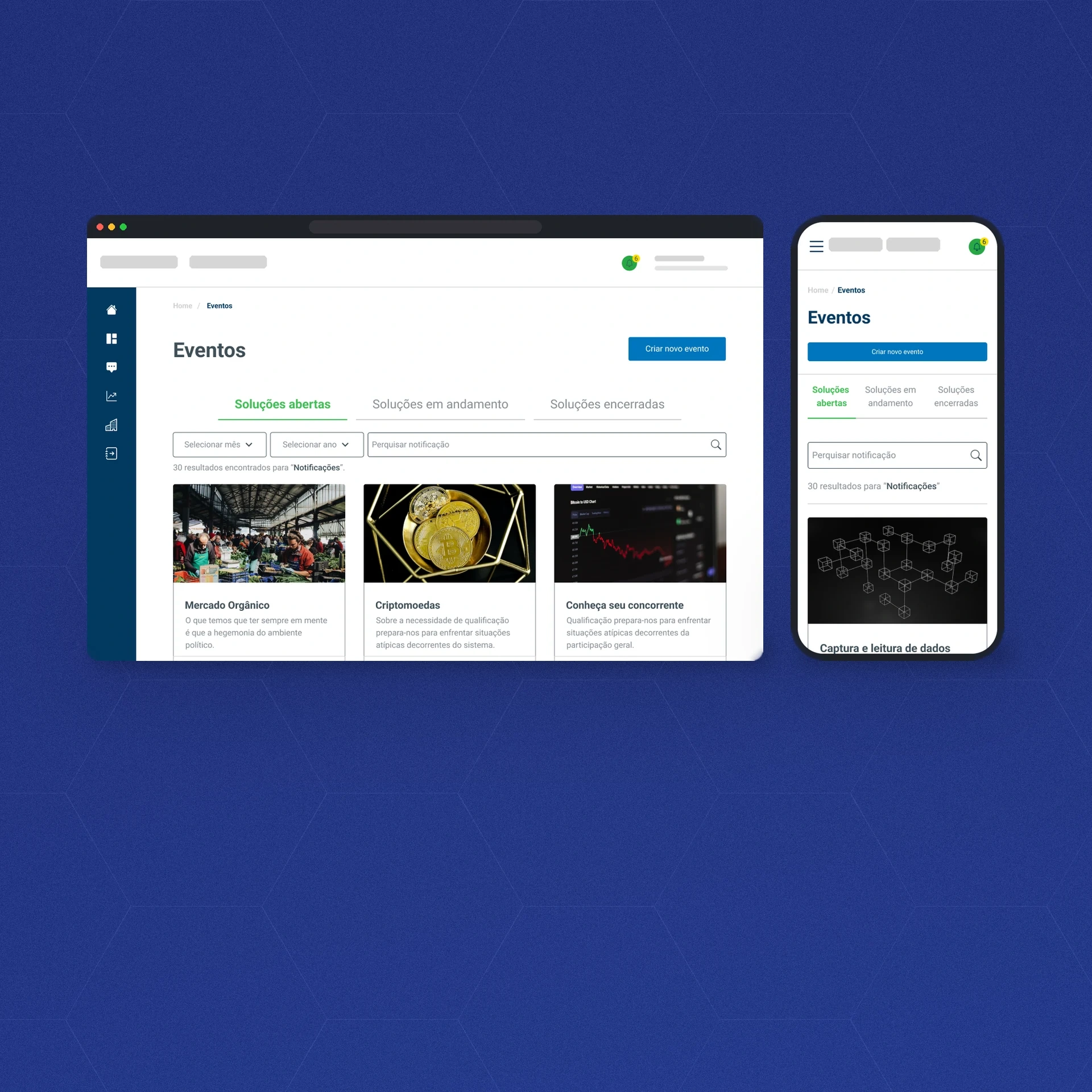
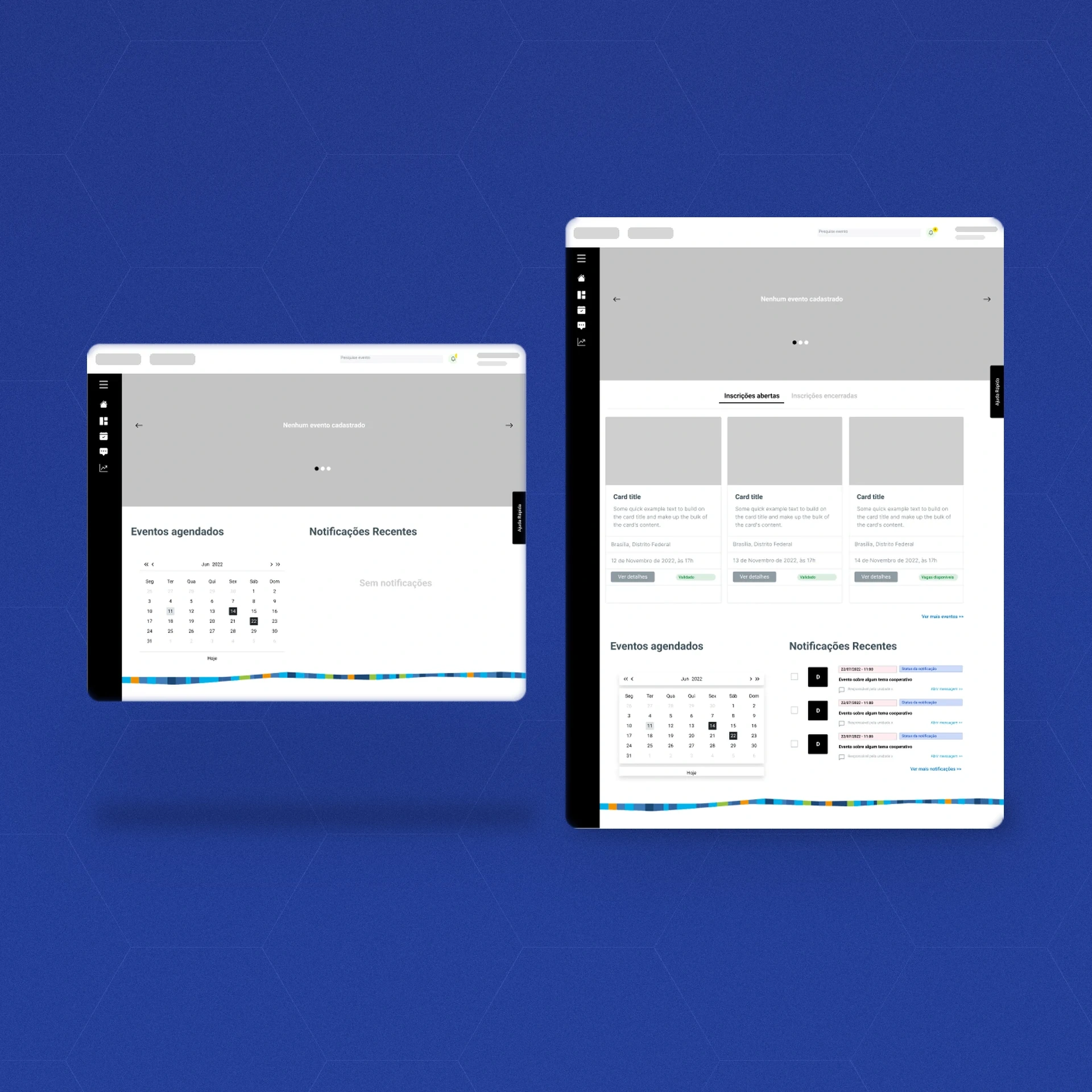
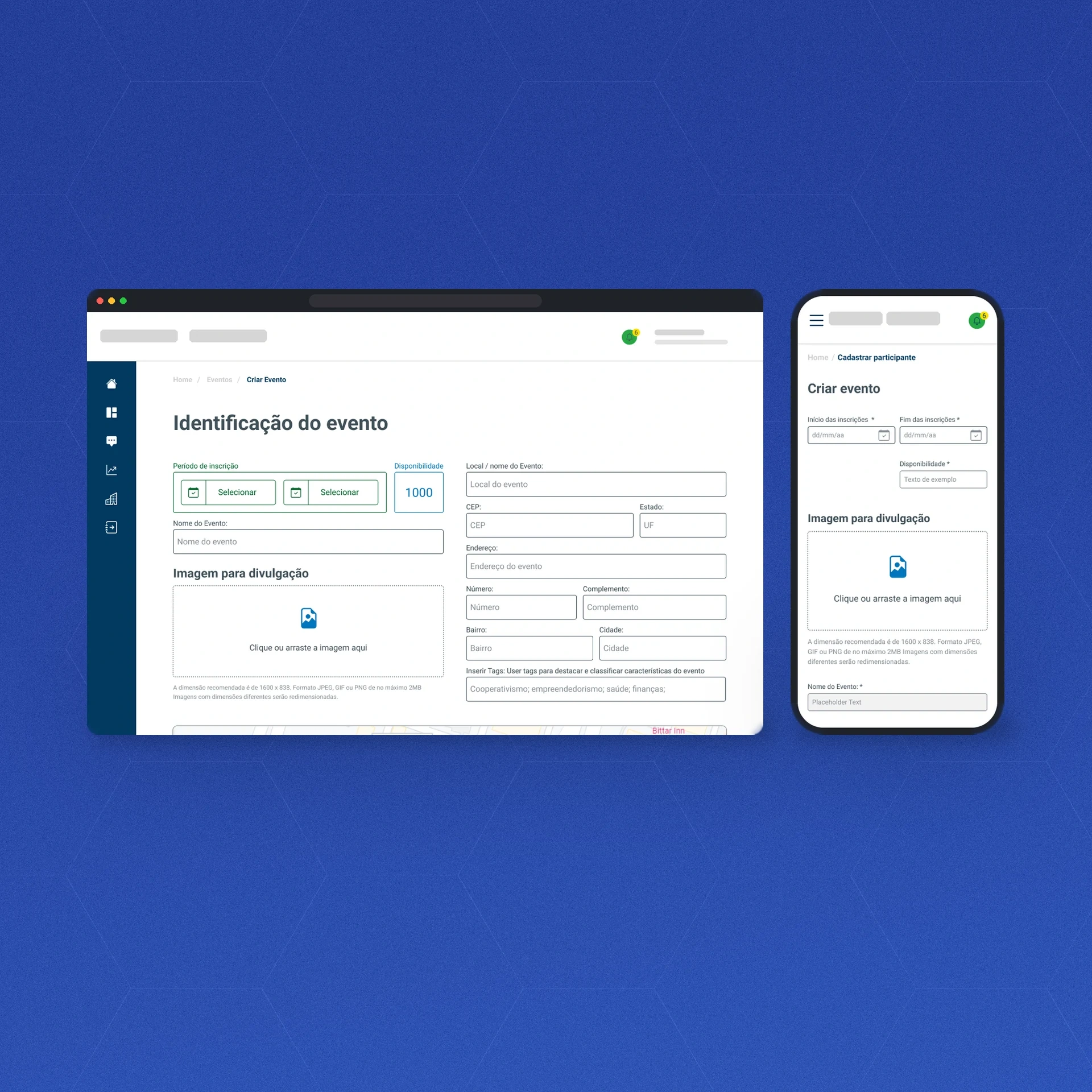
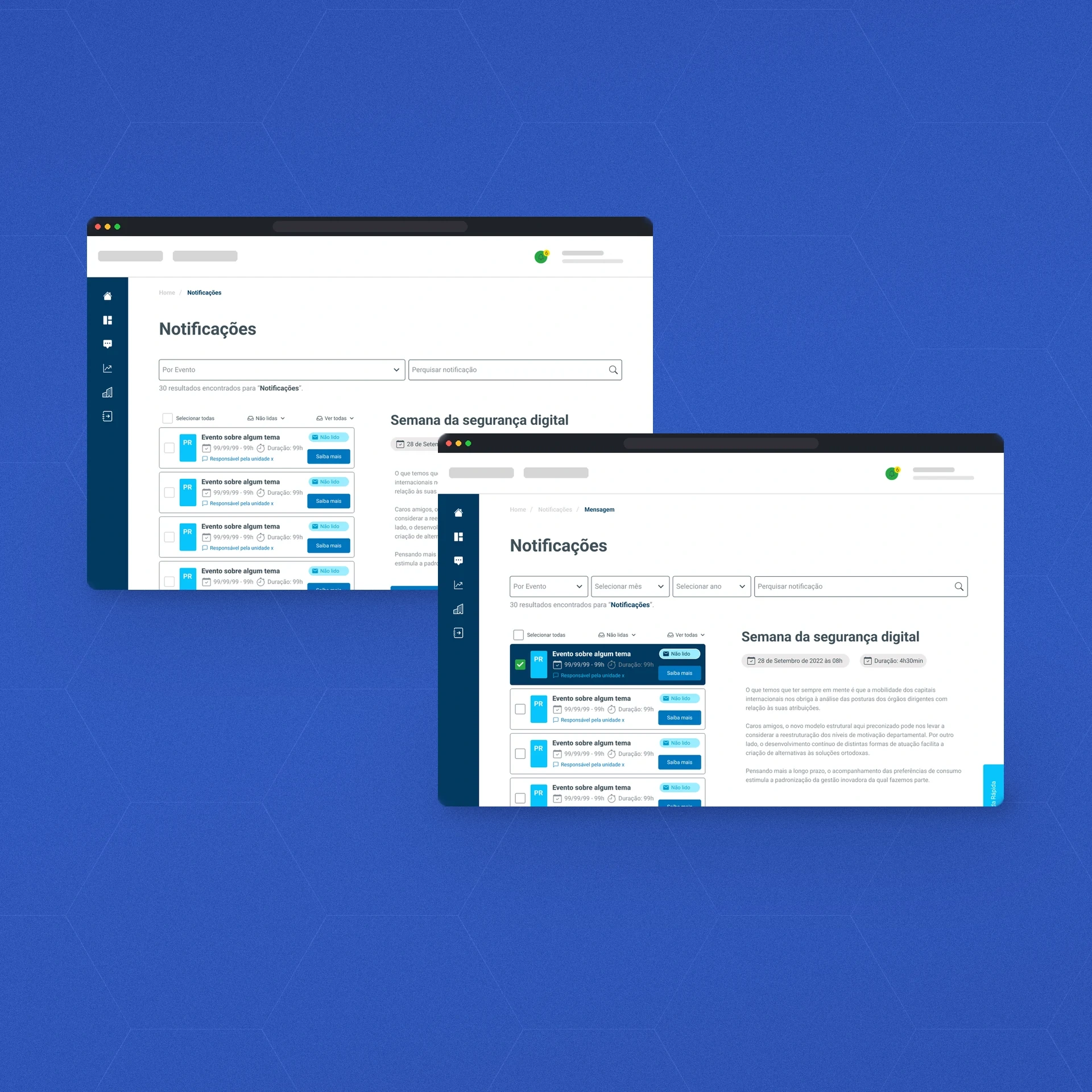
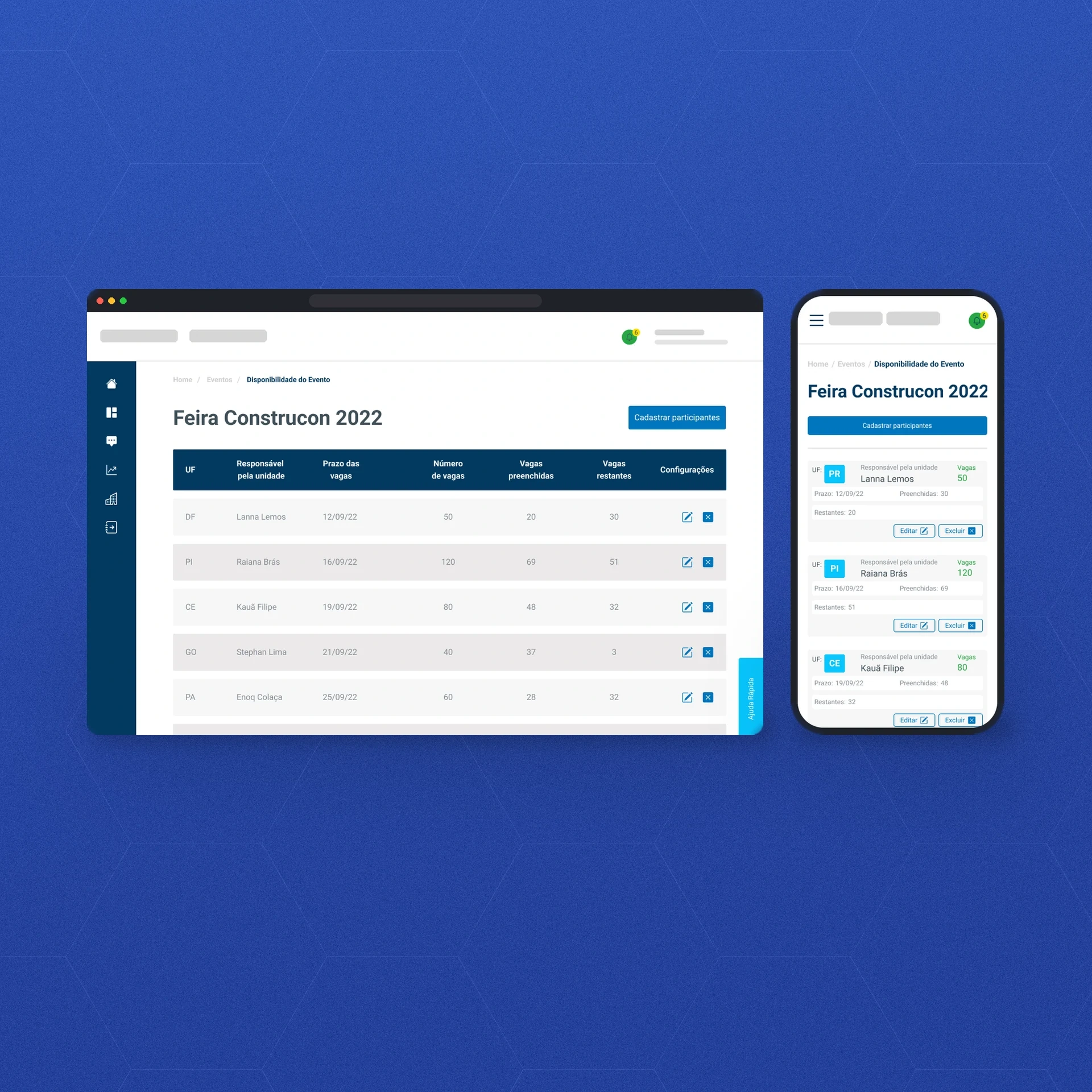
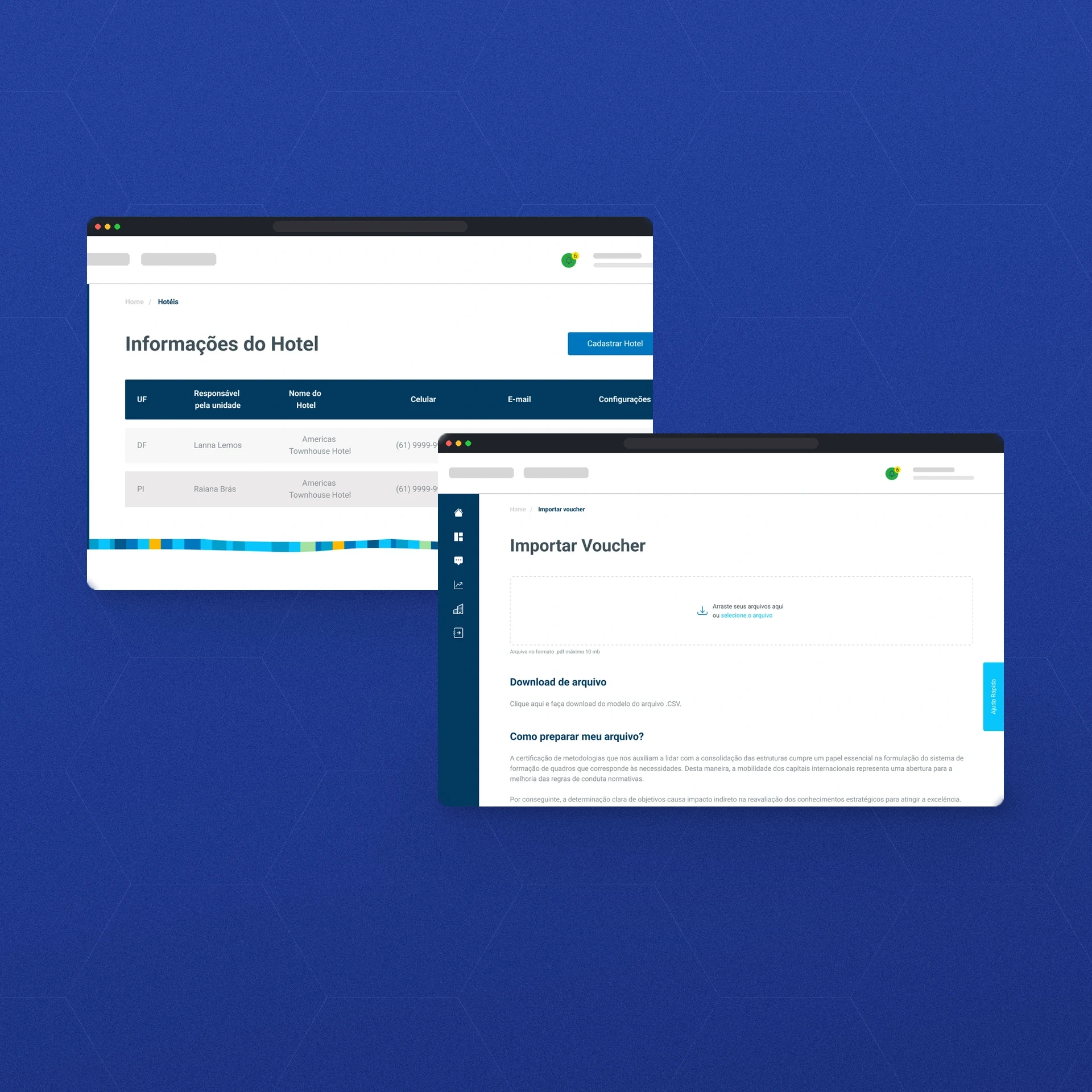
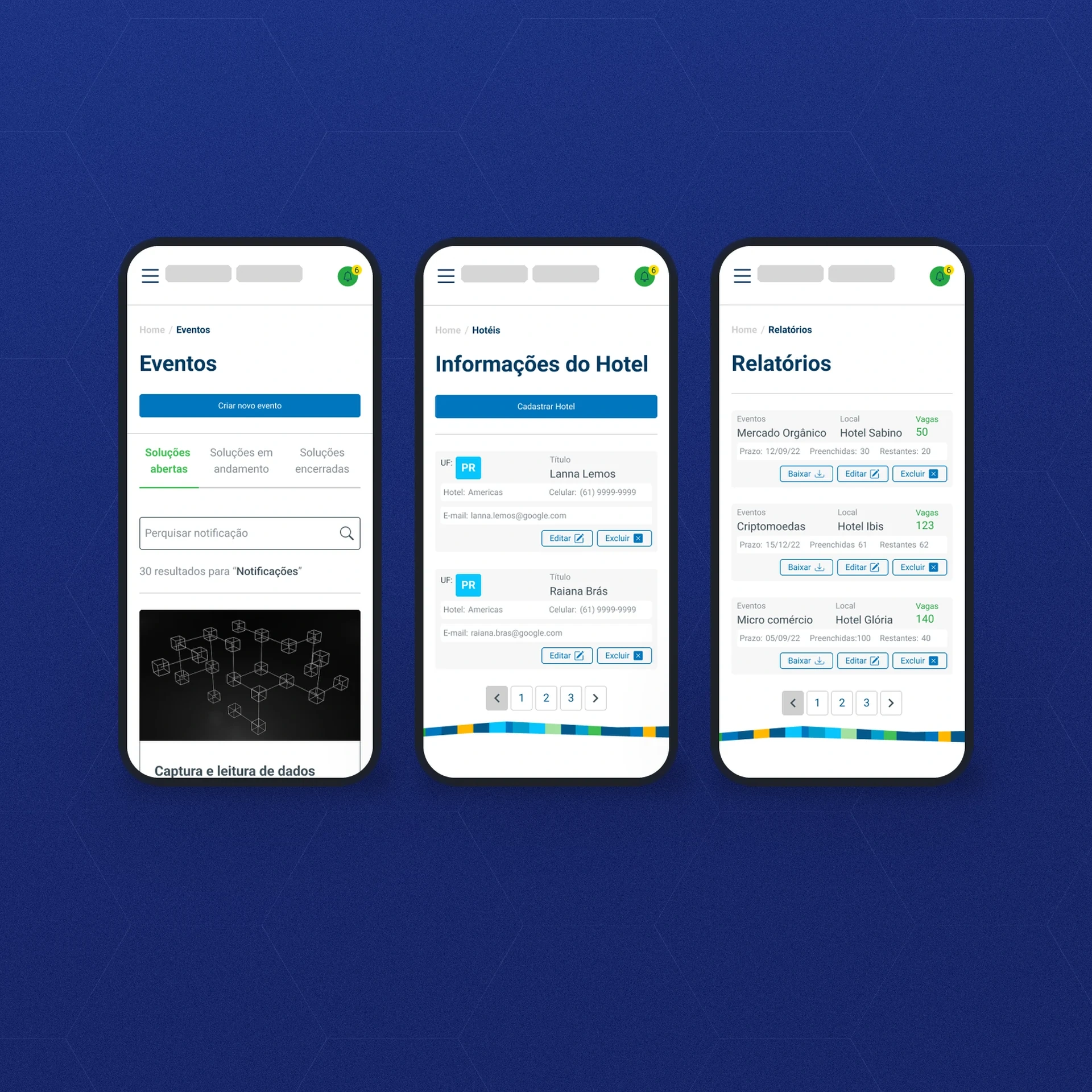
I designed the screens and assets for desktop and mobile, starting from wireframes such as the State Home, in two versions: empty state and state with events. The high-fidelity UI shows the event list, event creation, notifications, the table of spots by state (UF), with total, filled and remaining spots, hotel registration, voucher import and reports. The responsive mobile version, one of the certainties in the CSD matrix, covers events, hotels and reports. I then prototyped the navigation experience so the flow could be walked through and tested.
Usability test
The usability test took place on September 29, 2022, with the National Unit profile. It covered five scenarios:
- general navigation;
- event creation;
- spot distribution by state (UF);
- report generation;
- hotel registration.